
A temple kodimaram is the tall, metal-clad flagstaff that stands in front of the sanctum of a Kerala temple. It is usually the first thing a devotee sees after entering the outer gateway, and it is where the festival flag is raised at the start of every utsavam. For temple committees planning a new kodimaram, or replacing an old one, this guide explains what the kodimaram means, how it is built, which metals are used, how it is installed and how to look after it for decades.
At Kerala Metal Art we have been crafting kodimarams, brass works and gold covering for temples and churches since 2004. Everything in this article comes from that daily work in our workshop and on temple sites across Kerala.
In this guide
What Is a Temple Kodimaram?
In Malayalam, kodi means flag and maram means tree or pole, so the kodimaram is literally the “flag tree”. In Sanskrit texts it is called the dhwajasthambam (dhvaja-stambha), the flagstaff of the deity. You will find it in front of most major temples in South India, and in Kerala it has developed a distinct and very elegant form.
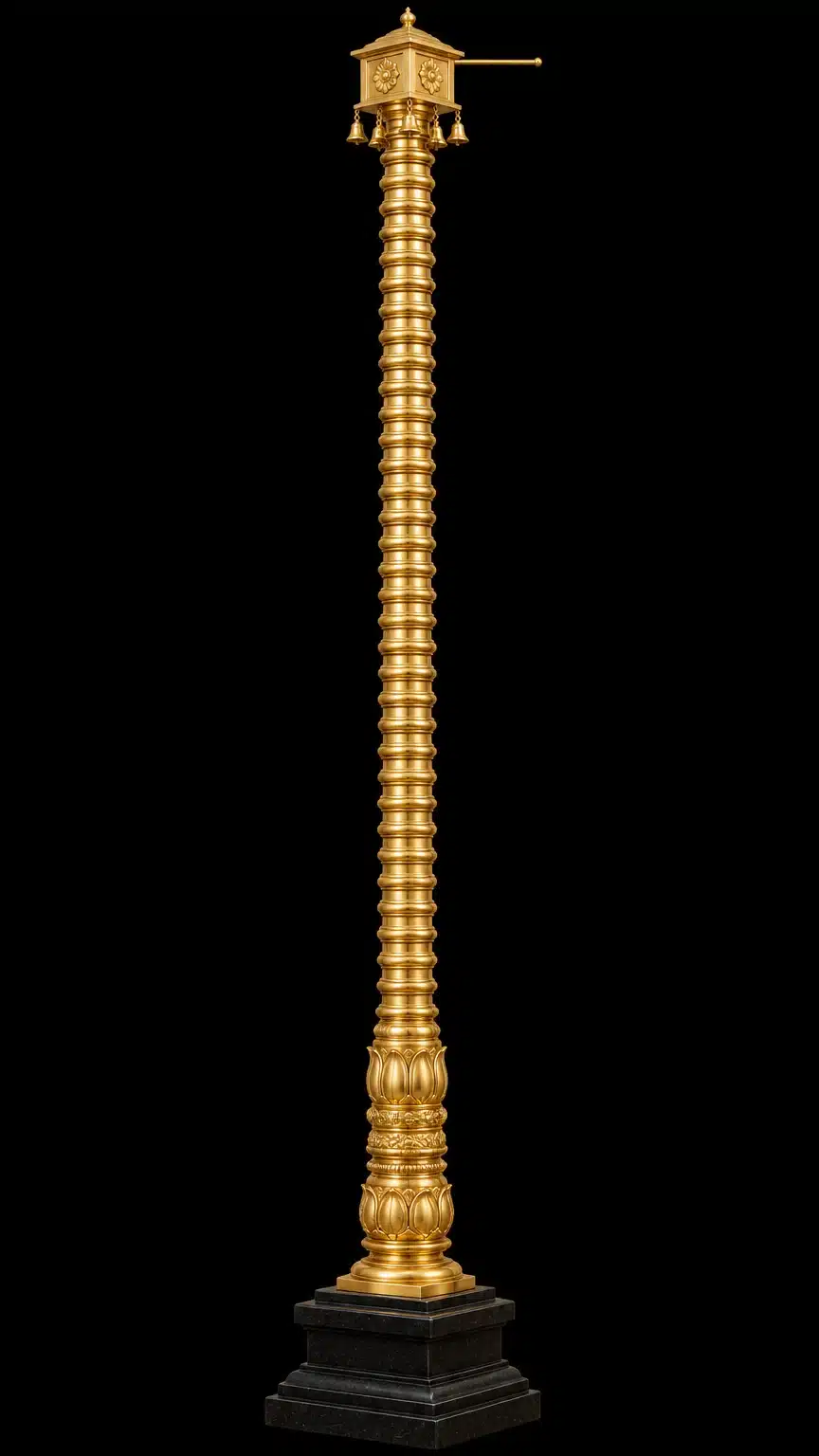
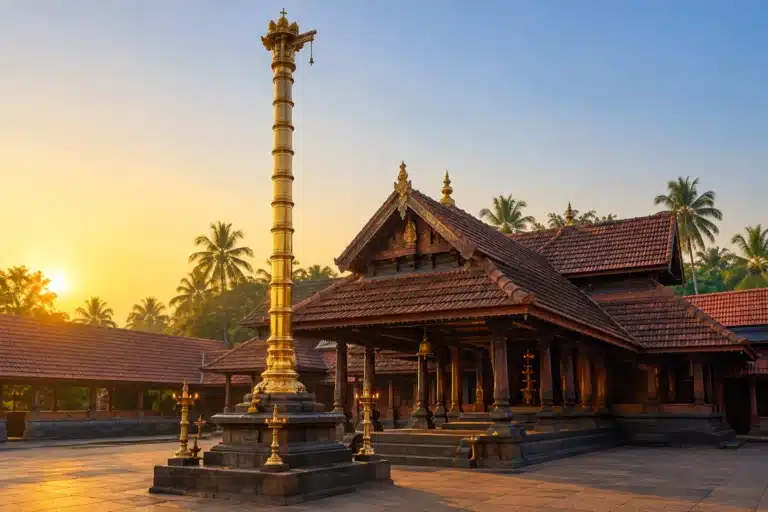
A Kerala kodimaram is traditionally a single, straight pole rather than a pillar with branches. A seasoned timber core gives it strength, and the visible surface is completely covered in metal sections that are hand-shaped by craftsmen. The result is a slender, gleaming column that can rise far above the temple roofs.
The dhvajastambha is usually grouped with two other sacred elements: the bali peedam, the altar for offerings, and the vahanam, the vehicle of the presiding deity. Together they guard and announce the sanctum, and devotees often bow before the kodimaram before they move on towards the sreekovil.
Spiritual Significance and the Kodiyettam Festival
For devotees, the temple kodimaram is far more than an architectural feature. It is consecrated together with the deity, and many priests describe it as an extension of the deity’s presence, rising from the earth towards the sky. A temple that has a temple kodimaram is understood to be a temple that celebrates a full annual festival.
The most important moment in the life of a temple kodimaram is the kodiyettam, the ceremonial hoisting of the festival flag. The tantri raises the flag after special poojas, and from that moment the utsavam has begun. Processions, seeveli, cultural programmes and the arattu follow over the coming days. When the festival ends, the flag is lowered in the kodiyirakkam ceremony.
Because of this role, the kodimaram is a matter of pride for the whole community. Families who have worshipped at a temple for generations often contribute towards a new kodimaram or its gold covering, and the dhwaja prathishta, the consecration of a new flagstaff, is one of the largest events a temple will celebrate in a generation.
The vahanam at the top
The top of a temple kodimaram usually carries the vahanam or emblem of the main deity. A Vishnu or Krishna temple commonly shows Garuda, a Shiva temple shows Nandi, a Subrahmanya temple shows the peacock and many Devi temples show the lion. The exact form, posture and size are decided by the tantri and the temple’s own traditions, and our craftsmen follow those instructions carefully.
Where the Kodimaram Stands in a Kerala Temple
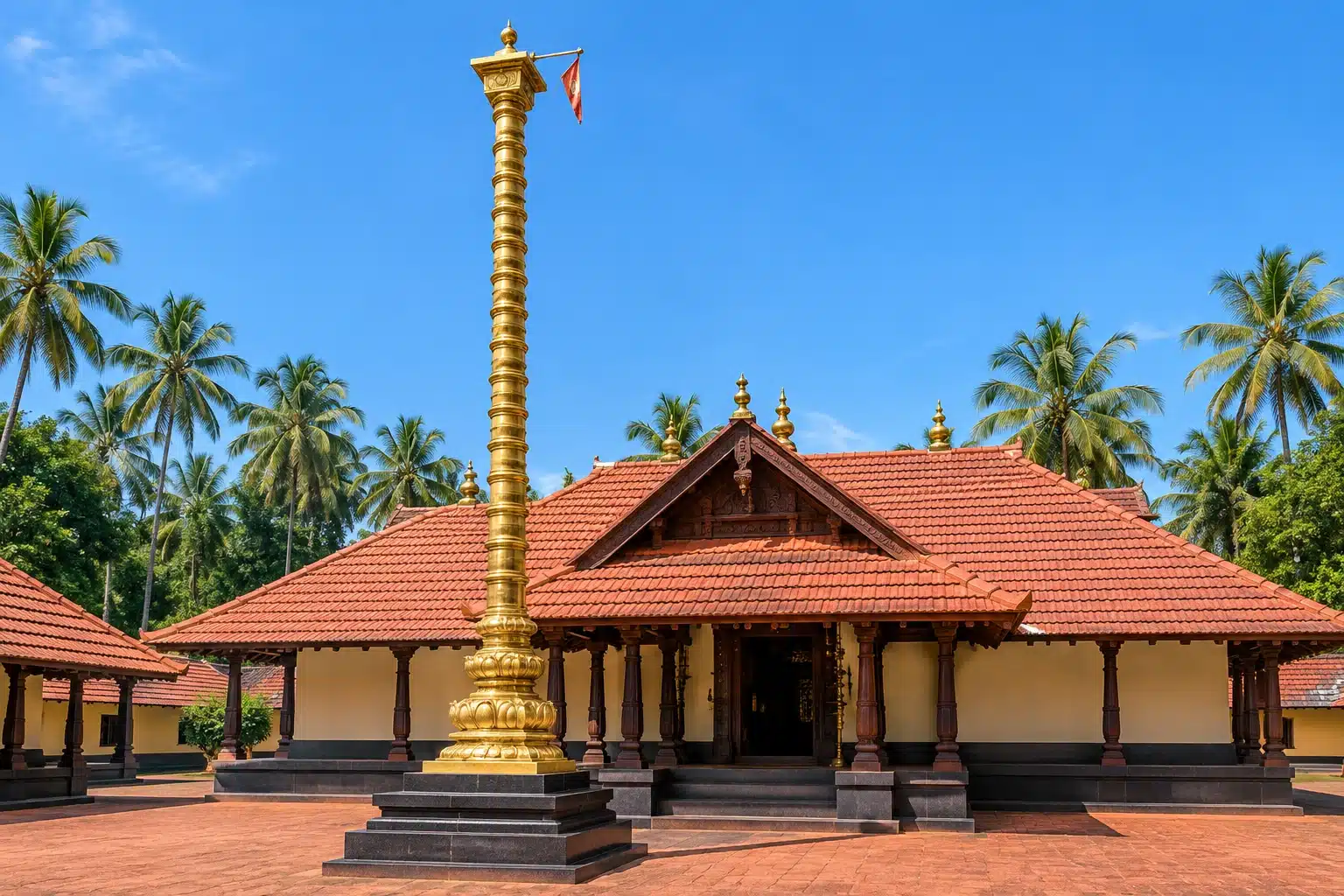
In a traditional Kerala temple, the kodimaram stands on the main axis of the sanctum, in front of the shrine and usually beyond the balikkalpura, where the large bali stone is placed. A devotee walking from the main gateway towards the sreekovil passes the kodimaram first. In temples where the deity faces east, the kodimaram therefore stands on the eastern side.
The exact position, height and alignment of a temple kodimaram are not chosen by the builder. They are fixed by the tantri according to the temple’s thantric texts and the proportions of the shrine. A good kodimaram maker works from these measurements and checks the site before any metal is cut, because a flagstaff that is even slightly off the axis cannot simply be moved later.
Parts of a Temple Kodimaram
Every temple has its own details, but almost every temple kodimaram in Kerala shares the same main parts. Knowing them makes it much easier for a committee to discuss designs and quotations.
- Peedam (base): a stepped base, usually of granite, with mouldings that often form a lotus. The lower metal cover sits on this base.
- Timber core: a single, straight, seasoned tree trunk that carries the load and gives the kodimaram its height.
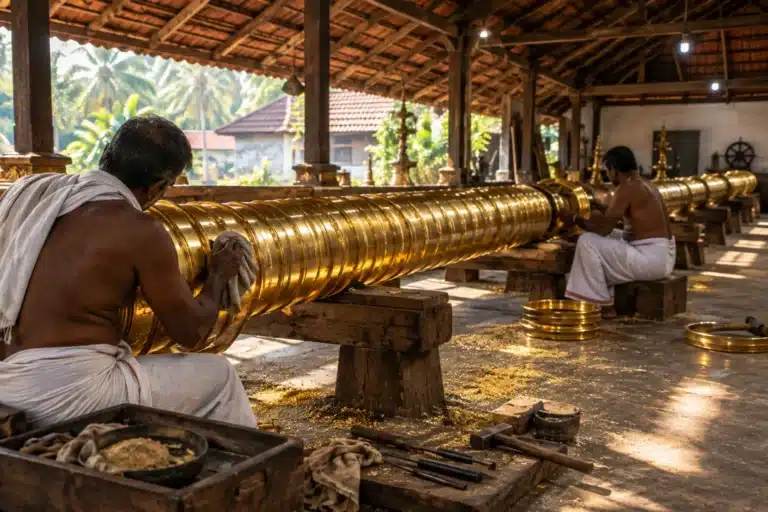
- Para or parah sections: the ring-like metal sections that cover the core. Each one is shaped, decorated and finished by hand, and they are stacked one above the other.
- Bands and mouldings: decorative rings, beads and petal patterns that mark the joints between sections.
- Upper tiers and bells: near the top, small tiers and bells give the kodimaram its classic silhouette and sound in the wind.
- Vahanam or emblem: the crowning figure of the deity’s vehicle.
- Flag fittings: the rope, pulley arrangement and fixings used for the kodiyettam.
Temple Kodimaram Materials: Brass, Copper, Bronze and Gold Covering
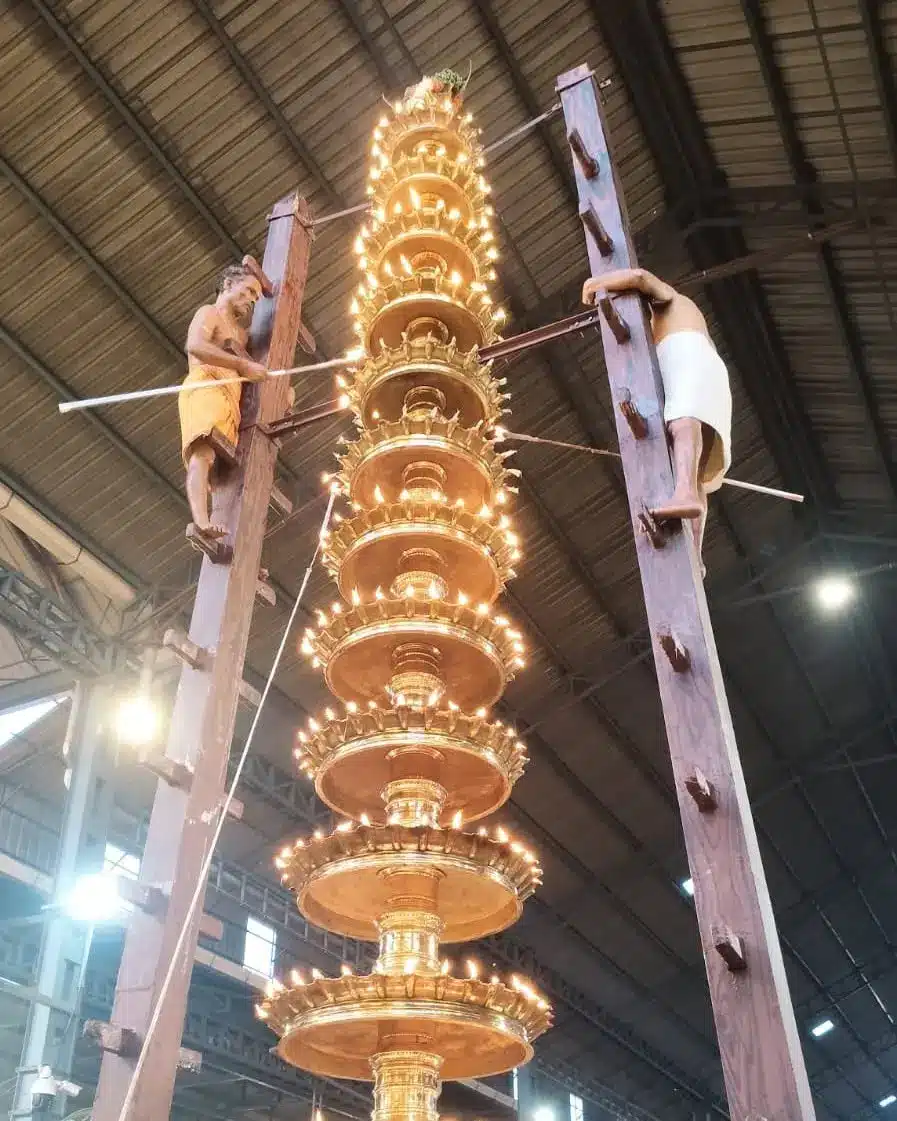
The choice of metal shapes the appearance, the budget and the long-term care of a temple kodimaram. Most temples choose one of the following for their temple kodimaram, and the tantri or devaswom board will sometimes specify it.
Brass kodimaram
Brass is an alloy of copper and zinc. It has a warm golden colour, takes fine repoussé and engraving very well and can be polished to a bright shine. A brass kodimaram is a popular choice for temples that want a traditional golden look with a manageable budget. It needs regular cleaning and periodic polishing to keep its glow.
Copper kodimaram
Copper has been used in temple work for centuries. It is soft, workable and long-lasting, and it is the usual base metal for gold covering. Left unplated, copper slowly develops a darker, natural patina that some temples prefer for its antique character.
Bronze and panchaloha parts
Bronze, an alloy of copper and tin, is mostly used for cast parts rather than the long sheet sections. The vahanam, the finial, bells and some decorative pieces are often cast in bronze or in panchaloha where the temple asks for it, because casting gives crisp detail and solid weight.
Gold-covered kodimaram
A gold-covered kodimaram, sometimes called a swarna dhwajam, is the most prestigious option. The metal sections are crafted first, usually in copper, and then covered with gold by a specialised process. The finish is brilliant and lasts for many years when it is cared for properly. You can see examples of this work on our gold covering page.
If you are weighing up brass against bronze, our separate guide on brass vs bronze kodimaram compares the two metals in more detail.
How a Temple Kodimaram Is Crafted
A temple kodimaram is not a factory product. Each one is made to order for a specific temple, and the work takes skill, patience and many pairs of hands. At our workshop the process follows these broad stages.
1. Site visit and measurements
We begin by studying the temple, the tantri’s instructions and the site. Height, diameter, the number of sections of the temple kodimaram, the base design and the vahanam are all agreed in writing before work starts.
2. Design and drawings
Our designers prepare drawings that show the profile of the kodimaram, the pattern on each section and the proportions of the vahanam. The committee and the tantri review these drawings, and changes are made at this stage rather than after the metal is shaped.
3. Shaping the metal sections
Sheets of brass or copper are cut, rolled and shaped into the para sections. Craftsmen raise the decorative patterns by hand using the repoussé technique, hammering from behind and refining the details from the front. This is slow, careful work, and it is what gives a handmade kodimaram its depth and life.
4. Casting the vahanam and fittings
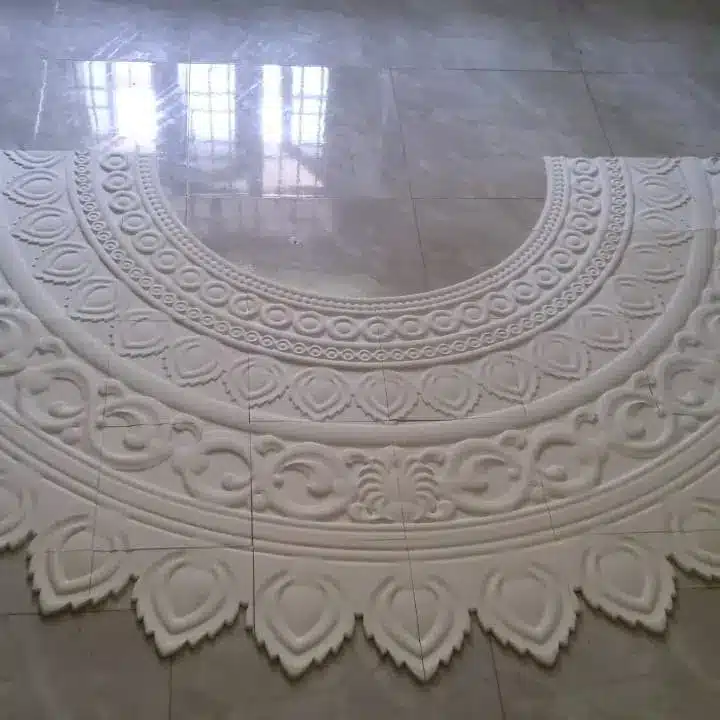
The vahanam, finial and bells are modelled and cast separately, then finished by hand so that every feather, fold or ornament is sharp and clear.
5. Finishing, plating or gold covering
Each section is filed, cleaned and polished. For a gold-covered kodimaram the gold is applied at this stage, and every piece is inspected before packing. Sections are numbered so that they go up in the right order on site.
Temple Kodimaram Installation and Dhwaja Prathishta
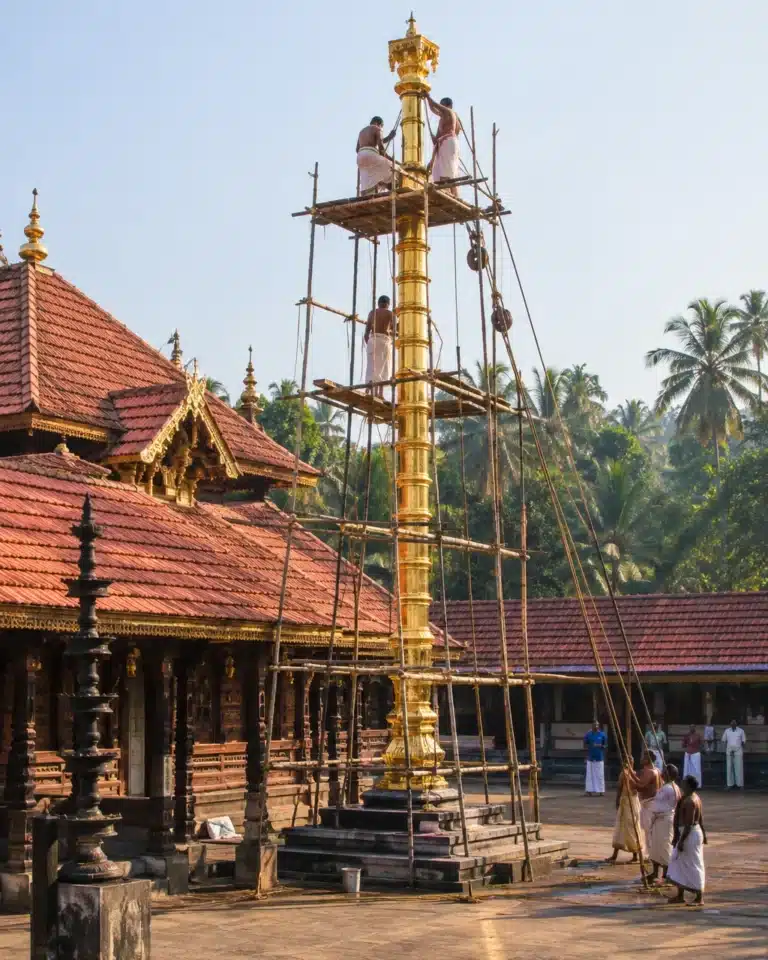
Installation is where craftsmanship meets ritual, and it is the most exciting stage of any temple kodimaram project. The timber core is prepared and treated, the base is completed, and the metal sections are fitted one by one from the bottom upwards. The vertical alignment is checked continuously, because a tall flagstaff must stand perfectly true.
The final consecration, the dhwaja prathishta, is performed by the tantri at an auspicious muhurtham. Our team plans the work schedule backwards from that date so that the kodimaram is complete, cleaned and ready well before the ceremonies begin. We cover the full process, from planning to handover, in our step-by-step kodimaram installation guide.
Care, Polishing and Long Life
A well-made temple kodimaram can serve a temple for many decades. A little care each year keeps your temple kodimaram beautiful and safe.
- Regular cleaning: remove dust, bird droppings and oil smoke with soft cloths and mild cleaners. Avoid harsh acids and abrasive powders on plated or gold-covered surfaces.
- Periodic polishing: brass and copper sections regain their shine with professional polishing. Our temple brass polishing works team does this on site.
- Inspect joints and fixings: check bands, bolts and flag fittings before every festival, and replace worn ropes in good time.
- Watch the timber: any sign of moisture, cracks or insects in the core should be checked by experienced craftsmen without delay.
- Ask about lightning protection: a tall metal-clad mast is often the highest point in the area, so discuss earthing and lightning protection with a qualified engineer.
Planning a New Temple Kodimaram
When a committee begins planning, it helps to agree a few things early. Collect the tantri’s measurements and instructions, decide on the metal and finish, set a realistic timeline that ends before the prathishta date, and ask each maker to show completed work you can visit or see in photographs.
It is also worth asking who will do the installation. A maker who both crafts and installs the temple kodimaram takes full responsibility for the fit, the alignment and the final finish. If you are comparing makers, our guide on how to choose a kodimaram manufacturer in Kerala lists the questions we would ask ourselves.
You can browse our temple projects in the photo gallery and see the full range of temple services, including roofing, thazhikakudam, balikkallu work and polishing. For product details, see our kodimaram for temples page.
A quick checklist for temple committees
- Written measurements and instructions from the tantri, including the vahanam.
- A decision on the metal and finish: brass, copper or gold covering.
- The source, seasoning and treatment plan for the timber core.
- Approved drawings for the sections, bands, base and crowning figure.
- A work schedule that ends comfortably before the prathishta muhurtham.
- A clear scope covering crafting, transport, installation, scaffolding and cleaning.
- A care plan for polishing and inspection in the years after installation.
Keeping these points in one shared document helps the committee, the tantri and the craftsmen stay aligned from the first meeting to the final ceremony.
Common mistakes to avoid
Over the years we have seen a few problems come up again and again when a temple kodimaram is planned in a hurry. Most of them are easy to avoid with a little preparation.
- Fixing the date before the plan: committees sometimes announce the prathishta date before the design, metal and timber are settled. Agree the scope first, then fix a date that gives the craftsmen enough time.
- Choosing on price alone: thinner sheets, shallow decoration or poor plating may look similar on day one but age badly. Ask for the sheet thickness, the finish and the scope of work in writing.
- Ignoring the timber core: the metal is only as good as the core it covers. Make sure the core is properly seasoned, treated and inspected before the sections are fitted.
- Separating crafting and installation: when one team makes the sections and another installs them, small fitting problems can turn into disputes. A single responsible maker avoids this.
- Forgetting the base and surroundings: the peedam, the paving around it and drainage all affect how the temple kodimaram looks and ages. Plan them together.
Temple kodimaram and church kodimaram
Kerala is unusual because the flagstaff tradition is shared by temples and churches. Many Kerala churches have a kodimaram in front of the building, often crowned with a cross, and the perunnal feast begins with a flag hoisting much like the kodiyettam. The craft is closely related, but the emblem, proportions and decoration follow the church’s own traditions. Our guide to the church kodimaram explains these differences.
Why temples choose Kerala Metal Art
- Traditional kodimaram craftsmanship since 2004.
- Brass, copper and gold-covered kodimarams, made to order for each temple.
- Designs prepared with the tantri’s measurements and the temple’s traditions.
- On-site installation by our own experienced team.
- Care and polishing support long after the prathishta.
Planning a temple kodimaram?
Share your temple’s details, the tantri’s measurements and your preferred metal, and our team will guide you through design, crafting and installation.
 Kodimaram
 Kodimaram
 Kodimaram
 Kodimaram