
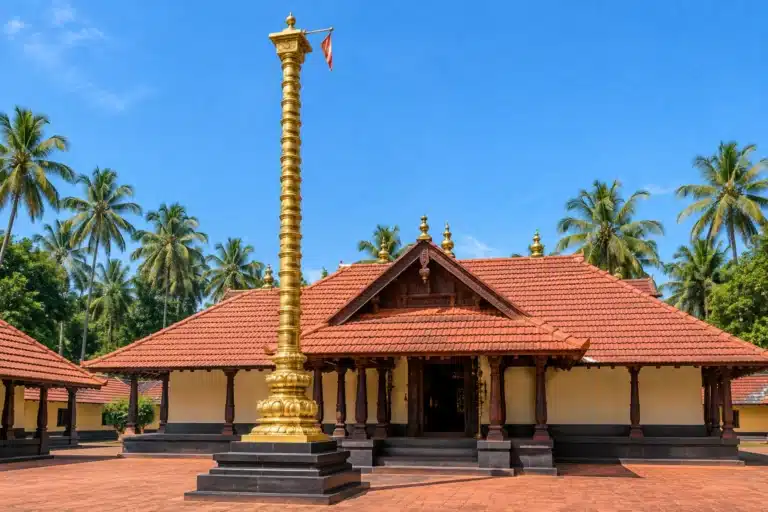
A brass kodimaram or a bronze one? It is one of the first questions a temple committee asks when planning a new flagstaff, and the answer is not as simple as choosing a colour. Brass and bronze are both copper alloys with a long history in Kerala temple work, but they behave differently in the workshop, age differently in the sun and rain, and suit different parts of the kodimaram. This guide compares the two metals side by side, explains where copper and gold covering fit in, and helps you choose with confidence.
Kerala Metal Art has been shaping, casting and finishing temple metalwork since 2004. We work with brass, bronze and copper every day, and this comparison reflects what we see on real kodimaram projects.
In this guide
Brass and Bronze: The Basics
Brass is an alloy made mainly of copper and zinc. It has a bright, golden-yellow colour, it can be rolled into sheets of even thickness, and it responds beautifully to hand hammering, chasing and engraving. When polished, it has the warm glow that most devotees picture when they think of a temple flagstaff.
Bronze is an alloy made mainly of copper and tin. It is generally harder than brass, it casts very well into detailed shapes, and it has a slightly deeper, more reddish-brown tone. Bronze has been used for temple bells and sacred images in South India for many centuries, and the tradition of casting bronze vigrahams remains strong in Kerala today.
Both alloys contain a large share of copper, which is why they share a family resemblance and why both have been trusted for sacred objects in Kerala for so long. The exact proportions of the alloy vary between foundries and suppliers, so a reliable maker always confirms the grade of metal used for each part of the flagstaff and records it in the agreement.
Both metals are traditional, both are respected, and both can last for generations. The question is not which metal is “better” in general, but which metal is right for each part of the kodimaram and for your temple’s needs.
Why Temples Choose a Brass Kodimaram
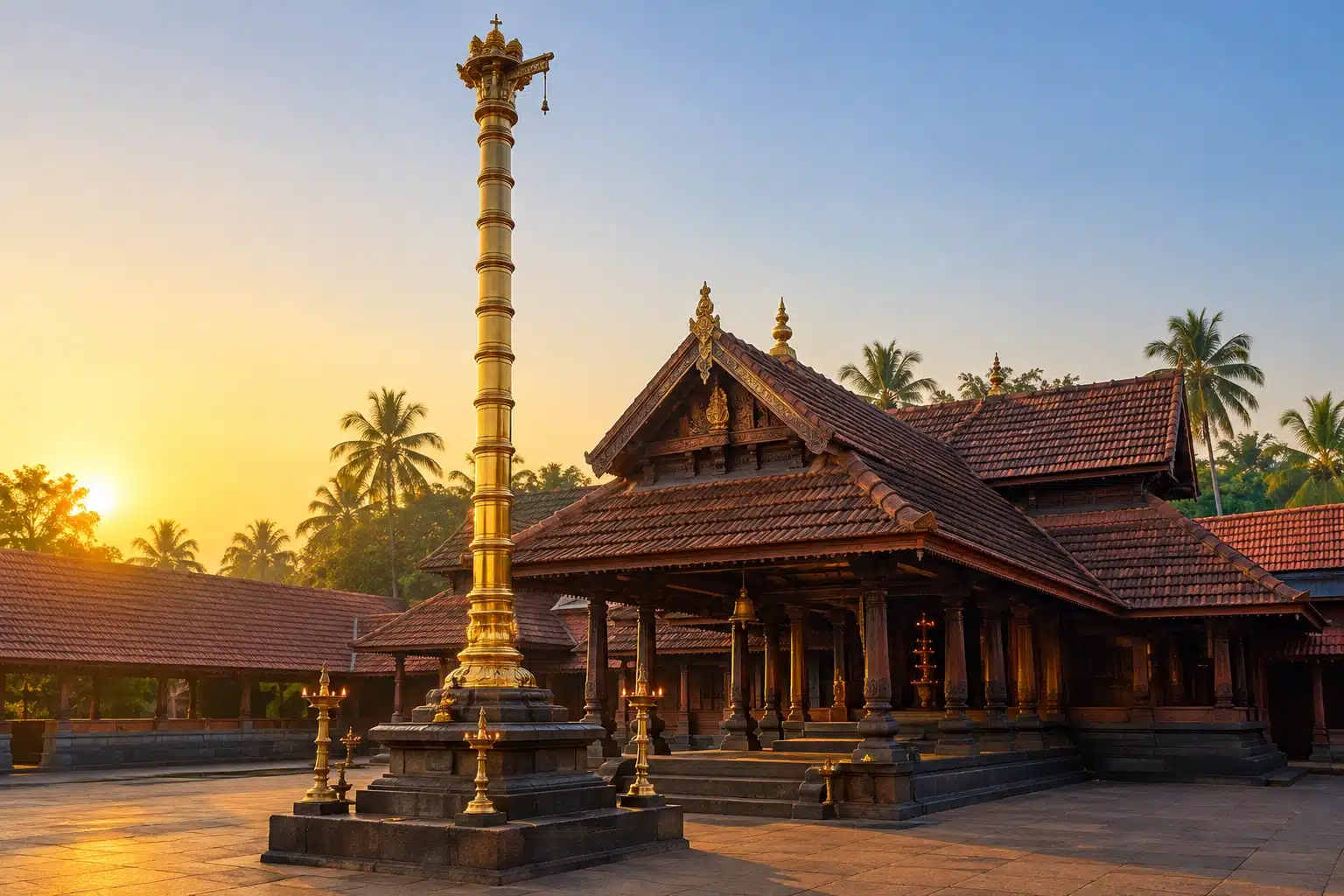
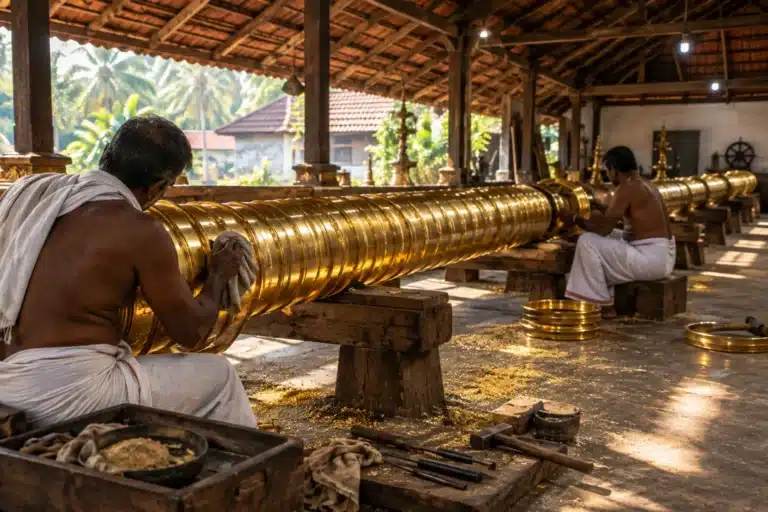
The long, visible body of a kodimaram is made of many para sections that wrap around the timber core. These sections are formed from metal sheets, shaped and decorated by hand. Brass is ideal for this work, which is why the brass kodimaram is one of the most common choices in Kerala.
Excellent for hand-decorated sheet work
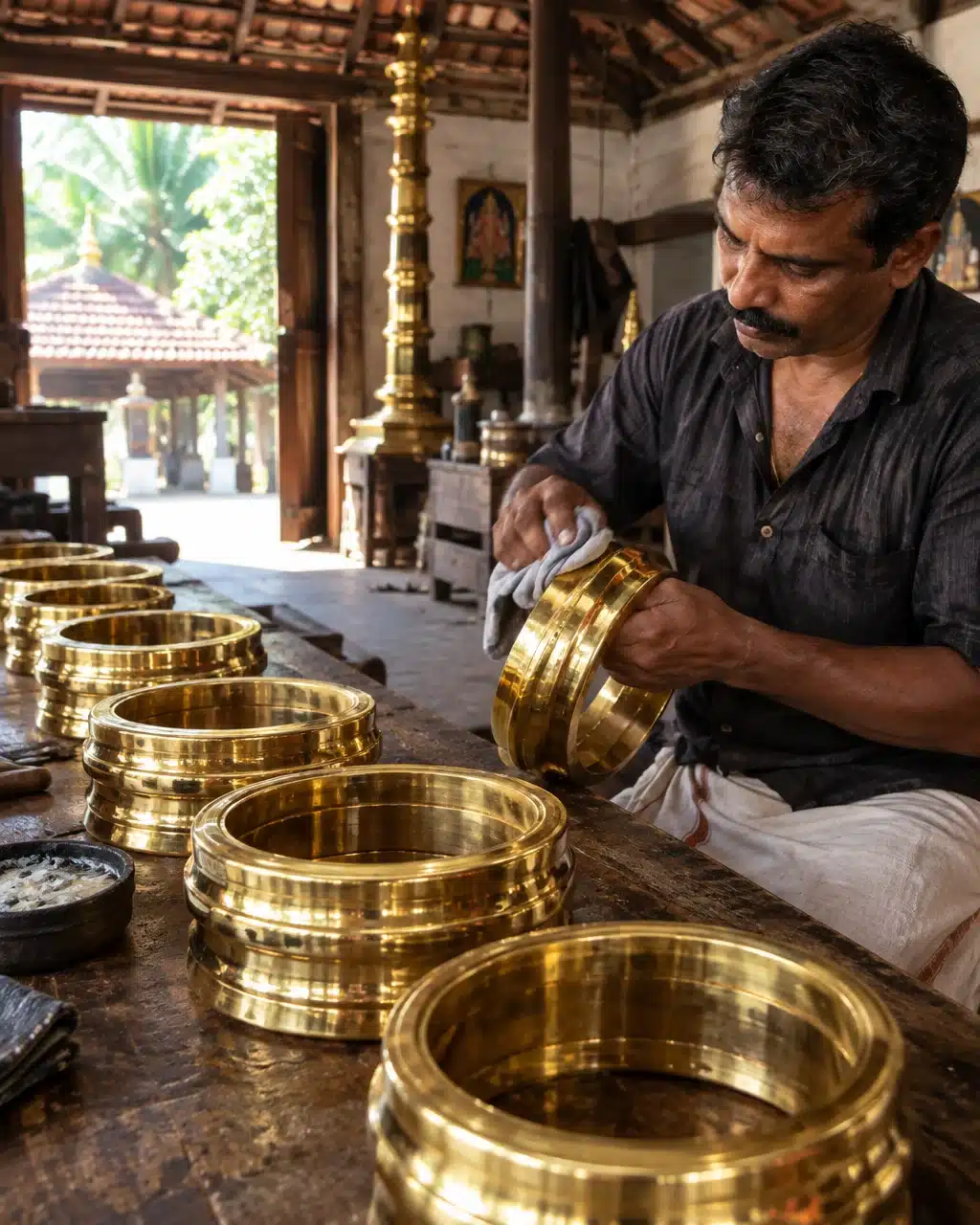
Brass sheets can be cut, rolled and hammered into rings, bands and petal patterns with great precision. Our craftsmen raise the decoration by hand using the repoussé technique, and brass holds these details crisply. A brass kodimaram therefore shows deep, lively patterns that catch the light from every angle.
A warm golden appearance
Polished brass has a rich golden colour that suits the traditional look of a Kerala temple. Many committees choose a brass kodimaram because it gives a golden presence in front of the shrine without the cost of full gold covering.
A balanced budget
Compared with a gold-covered flagstaff, a brass kodimaram is usually more affordable, which allows temples to invest in a taller structure, a thicker sheet or richer hand decoration within the same budget.
Easy to restore
Brass slowly darkens with exposure to air, smoke and rain, but its shine can be restored by professional polishing. A well-kept brass kodimaram can look almost new again after a careful polishing visit. See our temple brass polishing works for details.
Where Bronze Is Used in a Kodimaram
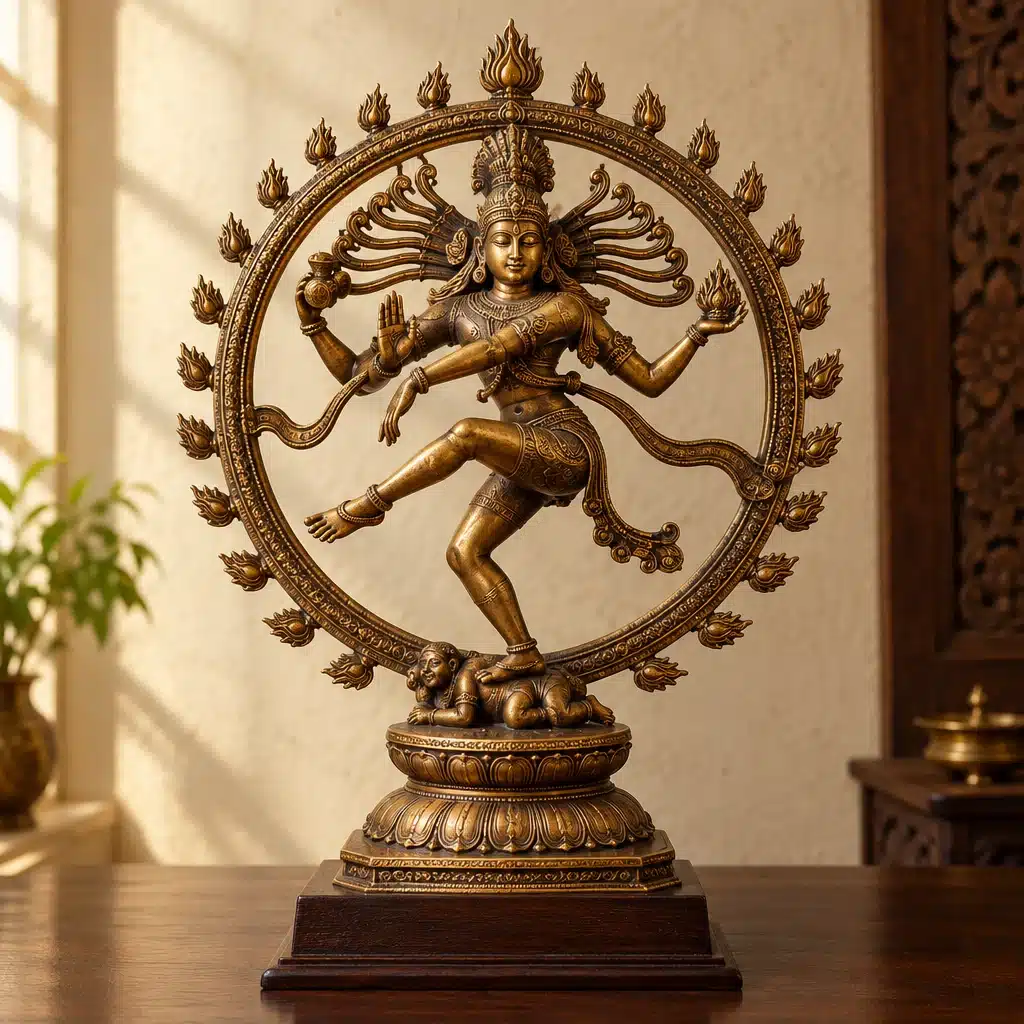
Bronze is rarely used for the long body sections of a Kerala kodimaram, because large, even sheets are more practical in brass or copper. Instead, bronze shines in the cast parts of the flagstaff, where its strength and casting quality are a real advantage.
- The vahanam: Garuda, Nandi, the peacock, the lion or another emblem of the deity is often cast in bronze, or in panchaloha where the tantri asks for it.
- Bells: bronze bells have a clear, ringing tone and are traditional in temples.
- Finials and ornaments: crowning pieces and small decorative castings gain crisp detail and solid weight in bronze.
So in practice, many kodimarams combine metals: a brass kodimaram body with bronze cast details, or copper sections with gold covering and a bronze vahanam. When committees ask for a “bronze kodimaram”, they usually mean a flagstaff with prominent bronze castings, and we explain the options clearly at the design stage.
Brass Kodimaram vs Bronze: 7 Key Differences
Here is a quick comparison of how the two metals perform in kodimaram work.
| Factor | Brass | Bronze |
|---|---|---|
| Main alloy | Copper and zinc | Copper and tin |
| Colour | Bright golden yellow | Deeper reddish-brown gold |
| Best use in a kodimaram | Body sections, bands, base cover | Vahanam, bells, finials, castings |
| Hand decoration | Excellent for repoussé and chasing | Excellent for detailed casting |
| Hardness | Softer, easy to shape | Harder, very durable |
| Ageing | Darkens, polishes back to a bright shine | Develops a richer patina over time |
| Typical cost | Generally more economical for sheet work | Usually higher for the same volume |
1. Composition
Brass is copper with zinc, bronze is copper with tin. This small difference changes how each metal is worked and how it looks.
2. Colour and appearance
A brass kodimaram has a bright, sunny gold tone. Bronze is deeper and warmer, and it suits figures and cast ornaments very well.
3. Workability
Brass is easier to roll and hammer into long decorated sections. Bronze is ideal for casting, where molten metal fills a detailed mould.
4. Strength and durability
Bronze is harder and highly durable, which suits parts at the top that face wind and weather. Brass is strong enough for body sections and is easier to repair or replace.
5. Ageing and patina
Brass darkens with time and returns to a bright shine with polishing. Bronze tends to develop a darker, richer patina that many people find beautiful on sacred figures.
6. Maintenance
Both metals need gentle cleaning. A brass kodimaram benefits from periodic polishing to keep its glow, while bronze castings usually need less frequent attention.
7. Cost
For the large surface area of a kodimaram, brass is generally the more economical choice. Bronze is typically reserved for the parts where its strengths matter most.
How to Judge the Quality of a Brass Kodimaram
Two flagstaffs can both be described as brass and still be very different in quality. When you compare proposals, look beyond the word “brass” and ask about the details that decide how a brass kodimaram will look and last.
- Sheet thickness: thicker sheets resist dents, hold deeper decoration and age better. Ask for the thickness in writing.
- Depth of decoration: hand-raised repoussé has real depth and sharp edges. Flat, shallow patterns look tired in strong sunlight.
- Tight joints: sections should meet cleanly, with bands that cover the joints neatly and line up from top to bottom.
- Even colour: well-made sections share a consistent tone, so the brass kodimaram reads as one continuous column rather than a patchwork.
- Quality of the castings: the vahanam and bells should be crisp, balanced and free of pits or rough patches.
- Surface finish: the final polish should be smooth and bright without scratches from hurried finishing.
The simplest test is to visit a temple where the maker installed a brass kodimaram several years ago. Joints, colour and decoration that still look good after a few monsoons tell you more than any brochure.
How Kerala’s Climate Affects Brass and Bronze
Kerala’s climate is humid, rainy and warm, with salt in the air near the coast. All of these affect how a flagstaff ages. Humidity and rain speed up tarnishing, salt air near the sea can encourage spotting, and smoke from oil lamps and festival fireworks leaves a dark film on the lower sections.
Brass reacts visibly to these conditions, darkening over months rather than years, but it responds very well to polishing. A brass kodimaram that is cleaned regularly and polished before major festivals keeps its golden look even in coastal temples. Bronze castings tend to develop a deeper patina that many temples are happy to keep, with occasional cleaning to remove dirt and soot.
Good design also helps. Sections that shed rainwater easily, sealed joints, a base that drains well and a properly treated timber core all reduce the effect of the monsoon on the metal and on the structure inside it.
Common Myths About Brass and Bronze
“Bronze is always better than brass”
Not for every part. Bronze is excellent for casting, but brass is usually the better material for the long, hand-decorated sections of a kodimaram. Each metal has its place.
“A brass kodimaram cannot last”
A well-made brass kodimaram on a sound, treated core can serve a temple for decades. Craftsmanship, sheet thickness and regular care matter far more than the label on the metal.
“Darkening means the metal is damaged”
Tarnish is a surface change, not structural damage. Professional polishing removes it and restores the shine without weakening the sections.
Copper and Gold Covering: The Other Options
Any comparison of kodimaram metals must also mention copper and gold. Copper is a traditional temple metal, soft and long-lasting, and it is the usual base for gold covering. A copper kodimaram that is left unplated slowly develops a dark natural patina that some temples prefer for its antique, timeless look.
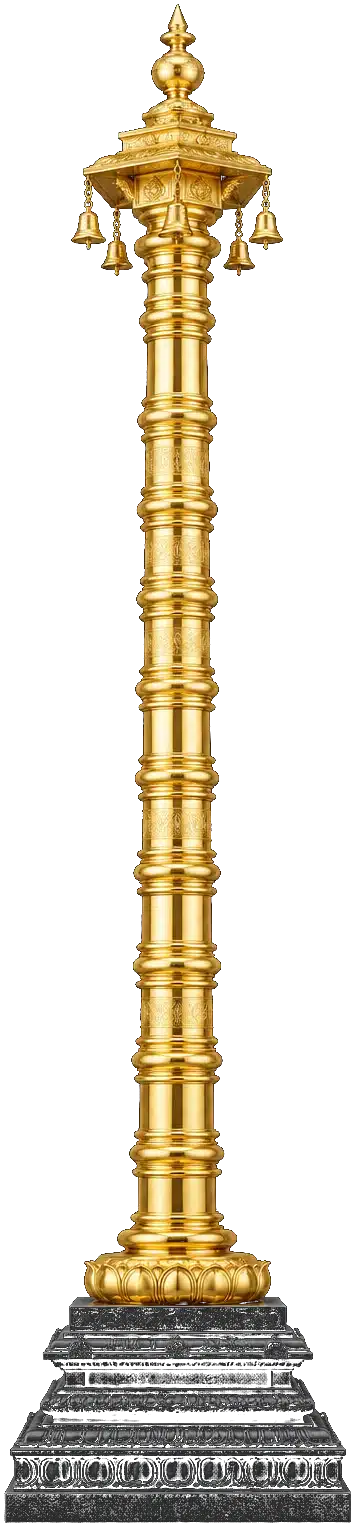
For the most prestigious finish, the sections are crafted in copper and then covered with gold, creating a gold-covered kodimaram or swarna dhwajam. The result is brilliant and dignified, and it is often chosen for major temples and important renovations. Explore our gold covering collection to see this work.
How to Choose: Brass Kodimaram, Bronze Details or Gold Covering
The right choice depends on your temple’s tradition, the tantri’s guidance, the setting and the budget. These questions help committees reach a clear decision.
- What does the tantri recommend? Some traditions specify copper, gold covering or particular metals for the vahanam. Always start here.
- What look do you want? A brass kodimaram gives a bright golden presence; copper ages to a deep antique tone; gold covering gives the richest glow.
- What is the budget? Brass offers excellent value for the body, allowing more height or decoration. Gold covering is a larger investment.
- Who will maintain it? If regular polishing can be arranged, a brass kodimaram stays beautiful. If maintenance will be rare, discuss finishes that age gracefully.
- What surrounds it? Matching the flagstaff to existing brass roofing, a thazhikakudam or balikallu work creates a unified look.
Matching the flagstaff with other temple metalwork
A kodimaram is rarely seen alone. It stands in line with the balikkalpura, the sreekovil roof, the thazhikakudam and often brass lamps such as a deepasthambham. When the metals and tones of these elements work together, the whole temple looks harmonious and complete.
If your temple already has brass roofing, a brass deepasthambham or brass balikallu work, a brass kodimaram usually continues that language naturally. If the sreekovil carries a gold-covered thazhikakudam, a gold-covered flagstaff may be the more fitting partner. We are happy to visit the temple and suggest a combination that respects what is already there.
Our usual recommendation
For most temples, we suggest a brass kodimaram body or copper sections with gold covering, combined with a finely cast bronze or panchaloha vahanam and bronze bells. This uses each metal where it performs best. We always finalise the choice together with the committee and the tantri.
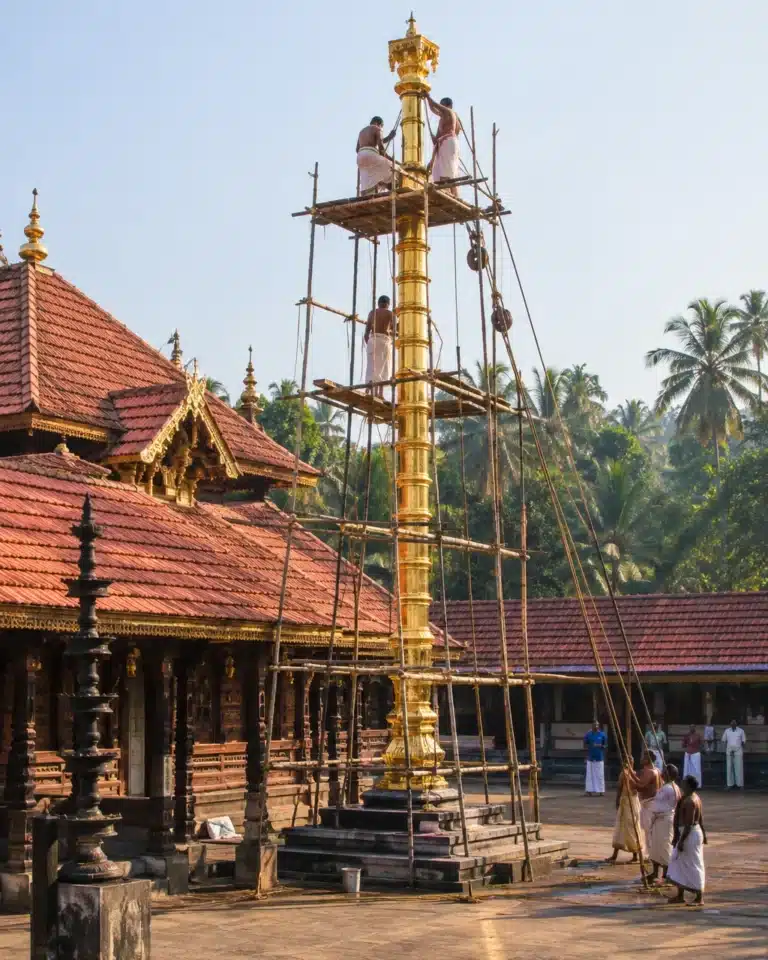
Read our temple kodimaram guide for the parts and meaning of the flagstaff, our guide on how to choose a kodimaram manufacturer, and the step-by-step installation guide.
Caring for Brass and Bronze
Whichever metal you choose, a little regular care keeps the flagstaff dignified and bright through every festival.
- Dust and wipe the lower sections regularly with soft cloths.
- Avoid strong acids, harsh chemicals and abrasive powders, especially on plated or gold-covered surfaces.
- Schedule professional polishing for a brass kodimaram before major festivals.
- Check bronze castings and their fixings during routine inspections.
- Keep oil lamps and smoke away from the base where possible to reduce soot stains.
Seeing the difference in person
Photographs can only show so much. The best way to understand the difference between a brass kodimaram and bronze detailing is to see the metals side by side in daylight. Committees are welcome to visit our workshop, handle sample sections and see vahanams at different stages of casting and finishing. You can also browse completed projects in our photo gallery and our works page.
Why Kerala Metal Art
- Brass, bronze, copper and gold covering work under one roof since 2004.
- Hand repoussé decoration on every brass kodimaram section.
- Finely cast and hand-finished vahanams, bells and finials.
- Designs prepared with the tantri’s instructions and the temple’s traditions.
- On-site installation and polishing support from our own team.
View the temple kodimaram and church kodimaram pages, or explore our wider kodimaram collection.
Not sure which metal to choose?
Tell us about your temple, the tantri’s guidance and your budget. We will explain the options and show you samples of brass, bronze and gold-covered work.
 Kodimaram
 Kodimaram
 Kodimaram
 Kodimaram