
Choosing the right kodimaram manufacturer is one of the most important decisions a temple or church committee will make. A kodimaram is expected to stand for generations, it is consecrated in front of the whole community, and it cannot easily be corrected once it is installed. This guide explains what separates a dependable kodimaram manufacturer in Kerala from the rest, which questions to ask, and which warning signs to watch for before you sign an agreement.
We write this as craftsmen. Kerala Metal Art has been making kodimarams, temple brass works and gold covering since 2004, and the points below are the same ones we would check if we were sitting on your committee.
In this guide
Why Your Choice of Kodimaram Manufacturer Matters
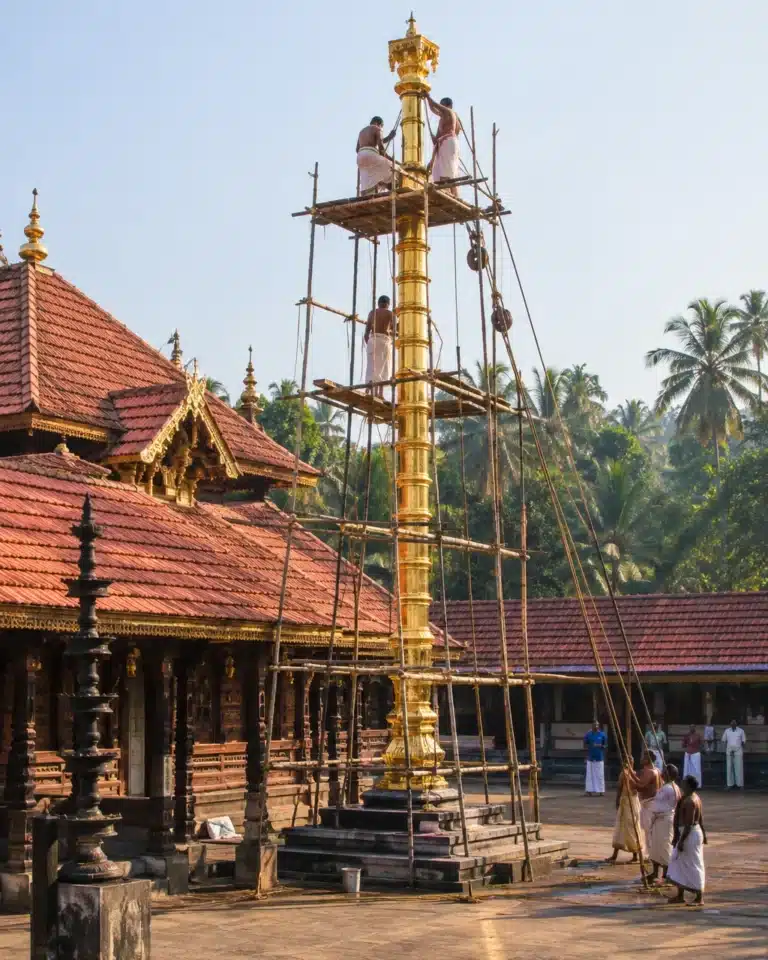
A kodimaram, the sacred flagstaff known in Sanskrit as the dhvajastambha, combines several crafts in one structure. There is timber work for the core, sheet-metal work for the sections, casting for the vahanam and bells, fine finishing or gold covering, and finally a delicate installation that must be perfectly vertical. A weakness in any one of these shows up sooner or later.
The kodimaram is also a ritual object. Its position, height and proportions follow the instructions of the tantri, and the dhwaja prathishta has to happen at a fixed muhurtham. A kodimaram manufacturer who misses a deadline or misunderstands a ritual requirement does not just cause inconvenience; it can delay a ceremony that the whole community has prepared for.
There is also the question of appearance over time. Sunlight, monsoon rain, oil smoke from lamps and festival crowds all test the finish of a flagstaff. Sections that were shaped carefully, joined tightly and finished properly keep their beauty for many years, while hurried work starts to show gaps, dents and dull patches within a few seasons. The difference is rarely visible on the day of installation, which is why the reputation and track record of the maker matter so much.
That is why price should never be the only basis for the decision. The right kodimaram manufacturer protects the committee from risk, keeps the tantri informed and delivers a flagstaff that still looks magnificent decades later.
8 Checks Before You Choose a Kodimaram Manufacturer
1. Proven experience with completed kodimarams
Ask how long the maker has been working on kodimarams specifically, not just general brass items. Request photographs of completed projects and, where possible, visit one or two temples or churches where their work has stood for several years. Ageing tells you more than a new photograph ever can.
2. Respect for thantric and church traditions
A good kodimaram manufacturer works closely with the tantri for temples, and with the parish and clergy for churches. They should be comfortable reading the measurements given to them, asking the right questions about the vahanam or cross, and planning the work around ritual dates rather than around their own convenience.
3. An in-house workshop and skilled craftsmen
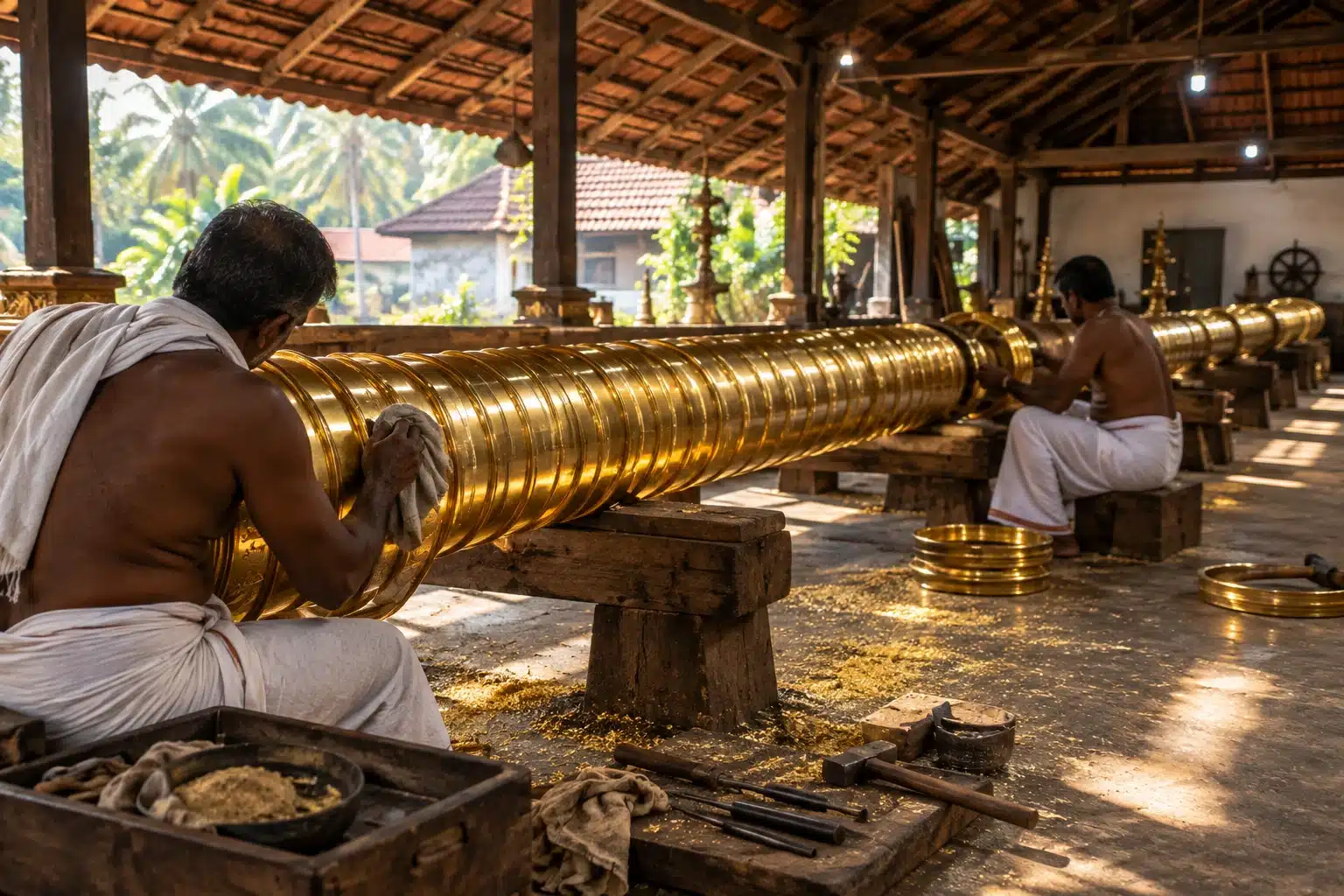
Find out where the work will actually be done and by whom. A maker with their own workshop and experienced craftsmen controls quality at every stage. If most of the work is passed on to other units, ask how they supervise it. A visit to the workshop is the quickest way to understand the real capacity of a kodimaram manufacturer.
4. Clear material specifications
The metal you choose, whether brass, copper or a gold-covered finish, should be written into the agreement, together with the sheet thickness, the type of finish and the materials for the vahanam and bells. Vague descriptions such as “best quality brass” are not enough. Our guide to brass vs bronze kodimaram explains how the metals differ.
5. Genuine hand craftsmanship
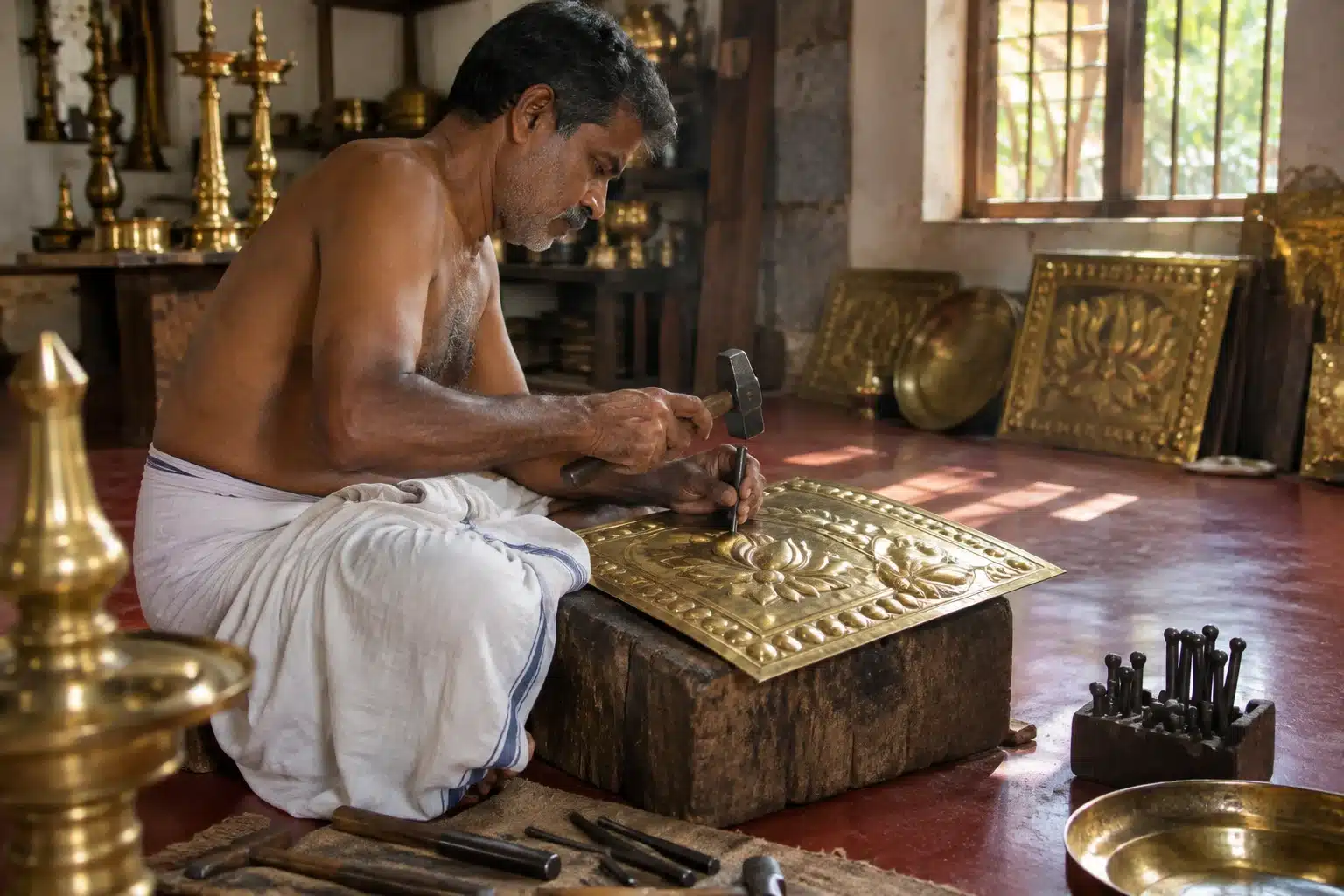
Look closely at the decoration on sample sections. Hand-raised repoussé work has depth and crisp edges, while shallow pressed patterns look flat in strong sunlight. Ask how the bands, petals and beads are made, and how the vahanam is modelled and cast.
6. Finishing and gold covering skills
The final finish is what devotees see every day. Ask the kodimaram manufacturer how they polish, plate or apply gold covering, how long the finish is expected to last with proper care, and what maintenance it will need. See our gold covering work for examples.
7. Installation by their own team
Installation is where many projects run into trouble. A maker who installs with their own team takes responsibility for alignment, fitting and the final clean, and there is no confusion over who must fix a problem. Our kodimaram installation guide shows what a careful installation involves.
8. Transparent quotation, timeline and after-care
A trustworthy quotation lists every item: design, timber preparation, sections, base covering, vahanam, bells, finish, transport, scaffolding, installation and cleaning. It also gives a realistic timeline and explains what support is available after the prathishta, such as polishing and inspections.
Questions to Ask Every Kodimaram Manufacturer
Bring the same list of questions to every meeting with a kodimaram manufacturer. Comparing answers side by side makes the decision much easier and keeps the discussion focused.
- How many years have you been making kodimarams, and can we see recent and older projects?
- Where is your workshop, and can our committee visit it?
- Who will prepare the drawings, and how will the tantri or parish approve them?
- Which metal, sheet thickness and finish are included in your price?
- How is the vahanam, cross or emblem made, and in which metal?
- How is the timber core selected, seasoned and treated?
- Do you install with your own team, and what equipment do you use?
- What is the full timeline, and how does it fit our prathishta date?
- What maintenance will the kodimaram need, and do you offer polishing later?
Warning Signs to Watch For
Most makers in Kerala, including almost every established kodimaram manufacturer, are honest people who care about their craft. Still, a few warning signs should make any committee pause and ask more questions before choosing a kodimaram manufacturer.
- No completed work to show: if a maker cannot show finished kodimarams or arrange a visit, treat that as a serious concern.
- A price far below everyone else: a much lower quotation usually means thinner metal, less hand work, a weaker finish or items left out of the scope.
- Unclear scope: if transport, scaffolding, installation or the vahanam are “to be discussed later”, costs may rise once the work has started.
- Promises that ignore ritual timing: a maker who agrees to any date without asking about the drawings, the timber or the tantri may not understand the work.
- No written agreement: every important detail should be on paper and signed by both sides.
What Affects the Cost of a Kodimaram
Every committee wants to know the cost early, and a responsible kodimaram manufacturer will explain the factors honestly instead of quoting a single number before seeing the site. Because each kodimaram is made to order, the final quotation depends on a handful of clear decisions.
- Height and diameter: a taller, wider flagstaff needs more metal, more sections and more installation work.
- Choice of metal: brass, copper and a gold-covered finish differ significantly in material cost and in the hours of finishing they need.
- Sheet thickness: heavier sheets cost more, but they resist dents and wear better over the years.
- Amount of hand decoration: deep repoussé patterns, detailed bands and ornate petals take many more working days than plain sections.
- The vahanam, cross or emblem: its size, the metal used and the level of detail all affect the price.
- Base and surroundings: covering the peedam, adding lotus mouldings or matching the paving add to the scope.
- Site conditions: distance, access for transport and the type of scaffolding required influence installation costs.
When you compare quotations, line these factors up side by side. Two figures that look very different often turn out to describe two very different kodimarams. A good kodimaram manufacturer will happily walk you through every line of the quotation.
How Long a Kodimaram Project Takes
There is no single answer, because the timeline depends on the size of the kodimaram, the metal, the amount of hand work and especially the finish. Gold covering, for example, adds several careful stages. What matters more than speed is a schedule that is honest and that works backwards from the prathishta muhurtham.
Ask your kodimaram manufacturer for a written schedule that shows the main milestones: drawing approval, timber preparation, completion of the sections, casting of the vahanam, finishing, transport and installation. Build in a margin before the ceremony. Rushed final weeks are where most avoidable problems begin, from incomplete polishing to fittings that are adjusted in a hurry.
Committees also have tasks of their own on this schedule. Approving drawings quickly, arranging the timber when the temple supplies it, and confirming the muhurtham early all help the craftsmen to deliver on time.
Renovating an Old Kodimaram or Replacing It
Not every temple needs a completely new flagstaff. Sometimes the metal sections are tired but sound, the finish has faded, or a few parts are damaged. In other cases the timber core has deteriorated and the whole structure must be renewed. An experienced kodimaram manufacturer will inspect the existing flagstaff and explain the options before recommending a direction.
When renovation may be enough
If the core is healthy and the sections are structurally sound, careful cleaning, repair of damaged parts, replacement of worn bands and professional polishing can transform an old kodimaram. A fresh gold covering can also be considered where the tradition allows it.
When replacement is the safer choice
If the core shows decay, cracks or insect damage, or if the flagstaff is leaning, replacement is usually the responsible choice. The tantri will guide the ritual side of removing an old kodimaram and consecrating a new one, and the maker plans the technical work around those rituals.
Keeping records for the future
Whichever path you choose, ask the kodimaram manufacturer for a simple record of the work: the drawings, the metal and finish used, the date of installation and the recommended maintenance. These records help future committees care for the kodimaram and plan the next renovation correctly.
What a Well-Run Kodimaram Project Looks Like
Every temple and church is different, but a well-managed project usually follows the same clear sequence. This is how we run our own kodimaram projects.
- First discussion: we learn about the temple or church, the tradition, the existing site and the target date.
- Site visit: our team studies the location, the axis and the access for transport and scaffolding.
- Drawings and approval: we prepare drawings using the tantri’s or parish’s measurements and refine them until they are approved.
- Agreement: metal, finish, scope, timeline and payment stages are written down clearly.
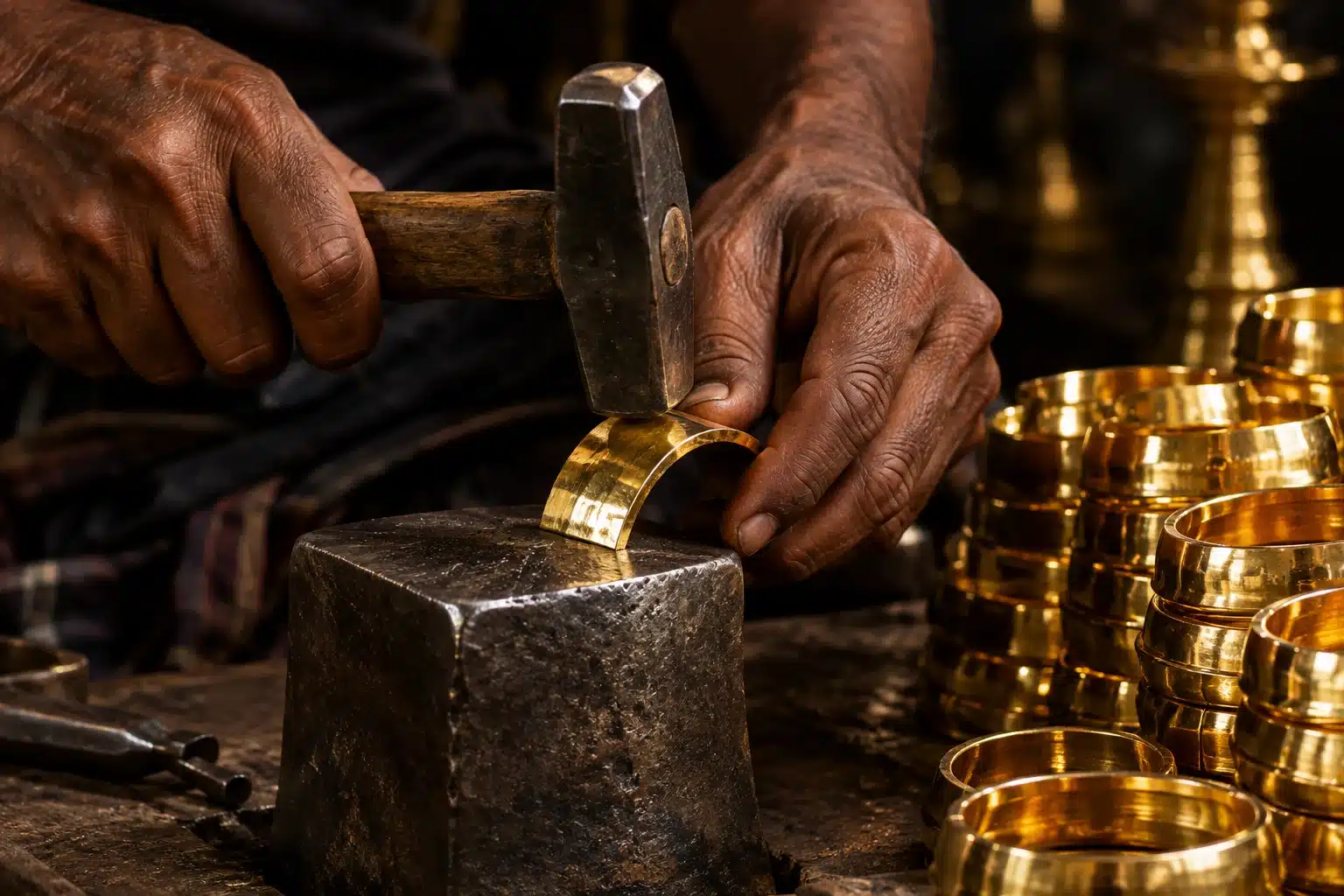
- Crafting: sections are shaped and decorated by hand, and the vahanam, cross or emblem is cast and finished.
- Finishing: polishing, plating or gold covering is completed and each section is checked and numbered.
- Installation: our own team installs the kodimaram, checks alignment and cleans every surface.
- Handover and after-care: we explain maintenance and remain available for polishing and inspections.
Working well with your kodimaram manufacturer
A successful project is a partnership. Even the best kodimaram manufacturer depends on clear decisions from the committee, and a few simple habits make the whole journey smoother for everyone involved.
- Appoint one contact person: the kodimaram manufacturer should know exactly who speaks for the committee, so that instructions are not mixed up.
- Share the tantri’s instructions early: measurements, the vahanam and any special requirements should reach the craftsmen before drawings begin.
- Visit during crafting: seeing the sections in the workshop before finishing lets you raise questions while changes are still easy.
- Keep decisions in writing: a short note after each meeting, shared with the kodimaram manufacturer, avoids confusion months later.
- Plan the site: clear access, safe space for scaffolding and a secure storage area make installation faster and safer.
When the committee and the kodimaram manufacturer communicate openly, problems are solved early, the craftsmen can focus on quality, and the prathishta becomes the joyful occasion it is meant to be.
Temple and church projects
Kerala is home to both temple and church flagstaff traditions. A kodimaram manufacturer who understands both can guide each community correctly. For temples, read our temple kodimaram guide; for churches, see our article on the church kodimaram.
Beyond the flagstaff
Many committees also plan related work at the same time, such as temple brass roofing, a gold-covered thazhikakudam, balikallu work or polishing. Working with one experienced team for these projects keeps the style, metal tone and finish consistent across the temple.
Why Committees Choose Kerala Metal Art as Their Kodimaram Manufacturer
We are a Kerala-based kodimaram manufacturer working in the traditional way, with our own craftsmen and our own installation team. Every kodimaram is made to order, and every design starts with the instructions of the tantri or the parish.
- Kodimaram and temple metal craftsmanship since 2004.
- Temple and church kodimarams in brass, copper and gold covering.
- Hand repoussé decoration and hand-finished cast vahanams and emblems.
- Clear drawings, written specifications and realistic timelines.
- On-site installation and after-care by our own team.
You can see completed work in our photo gallery and our works page, read about our story on the about us page, and view product details for the temple kodimaram and church kodimaram.
Talk to an experienced kodimaram maker
Tell us about your temple or church, your preferred metal and your target date. We will explain the options and the next steps clearly.
 Kodimaram
 Kodimaram
 Kodimaram
 Kodimaram